Filipino Faith and Heritage Shine at Sinulog Celebration in Lisbon
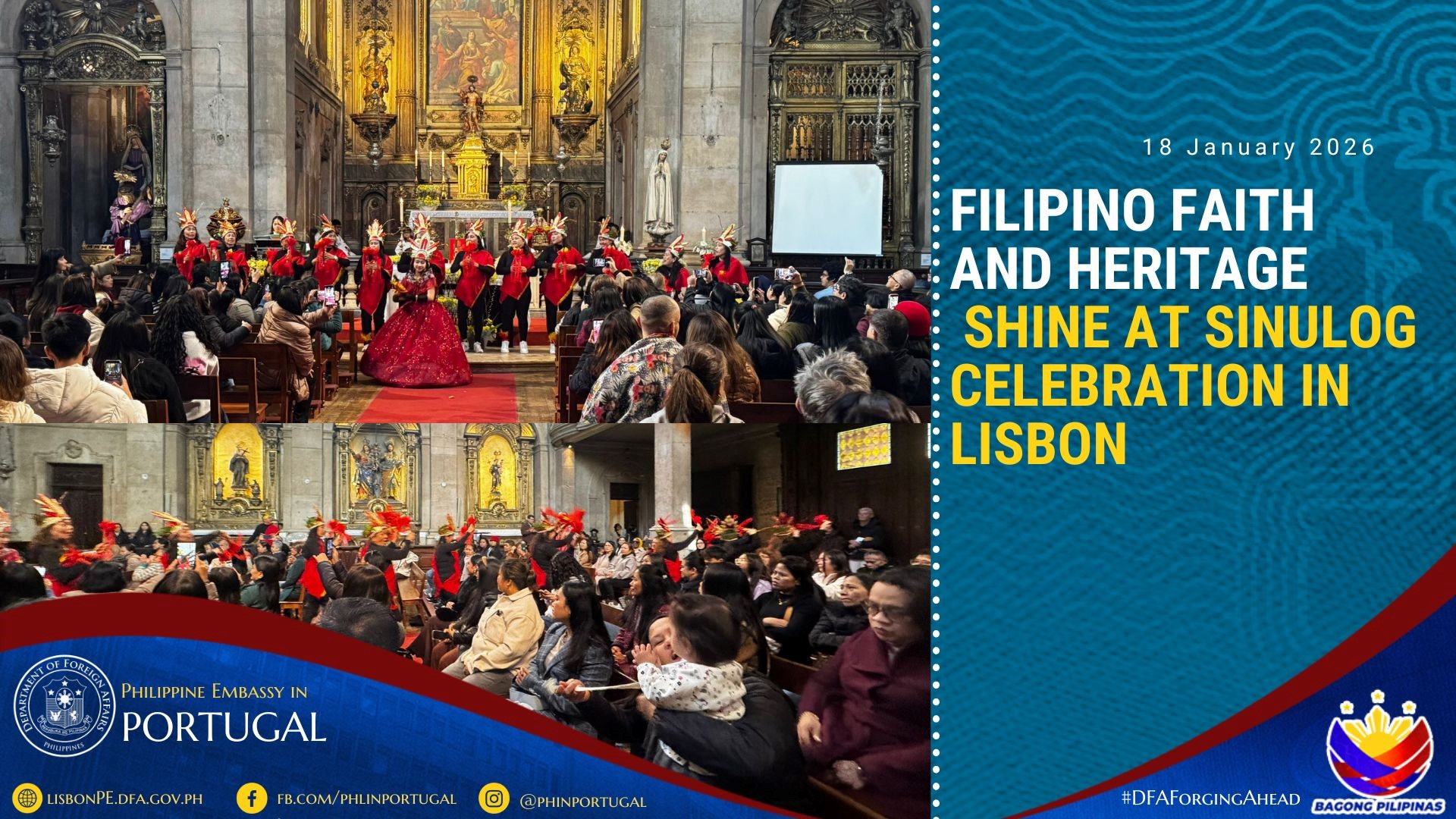
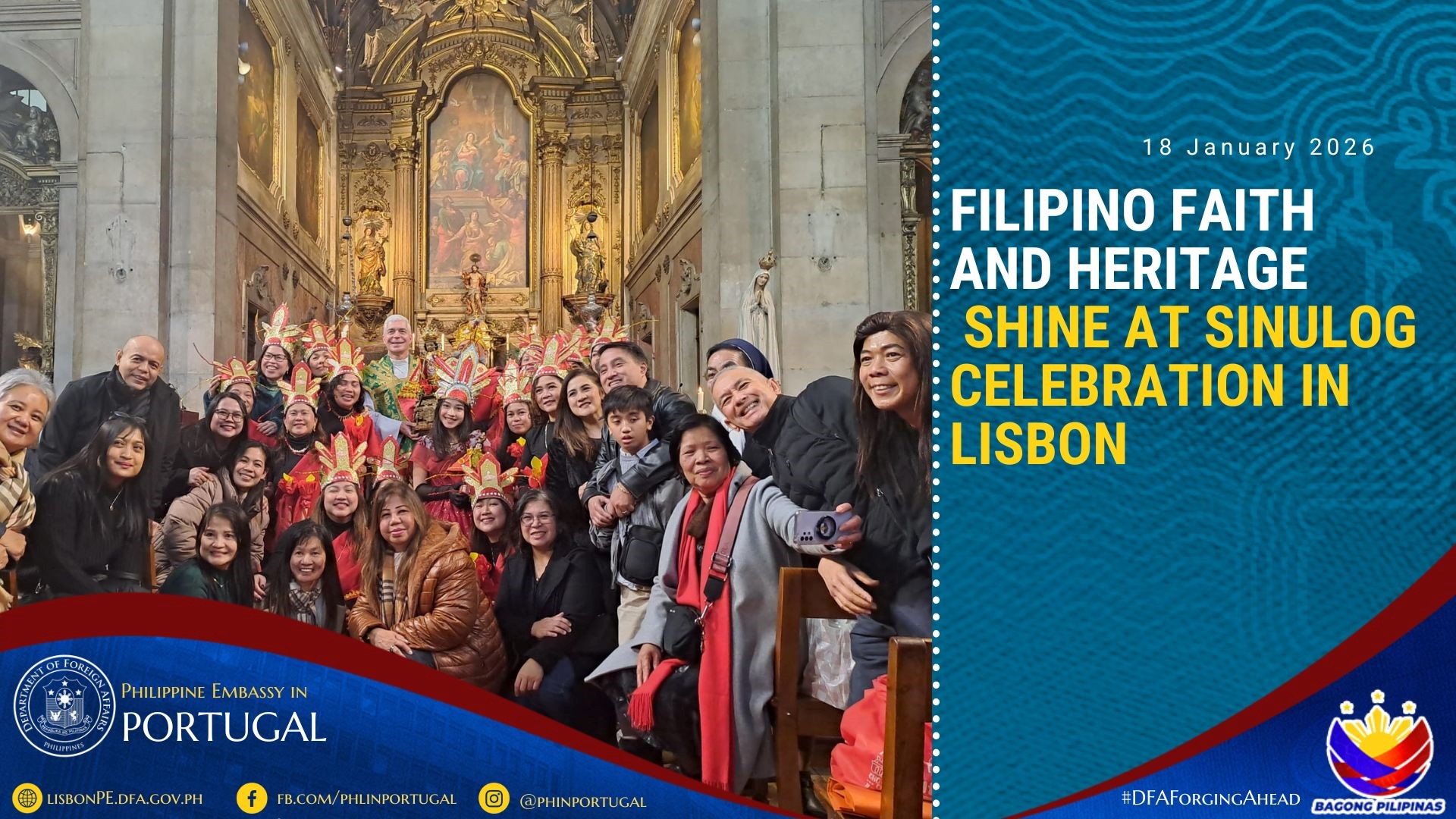
Lisbon, 19 January 2026 – The Philippine Embassy in Lisbon joined the Filipino Catholic Community in celebrating the Sinulog Festival in honor of the Señor Santo Niño on 18 January 2026 at the Igreja de Santa Maria Madalena, reaffirming cultural and faith-based ties among Filipinos in Portugal.
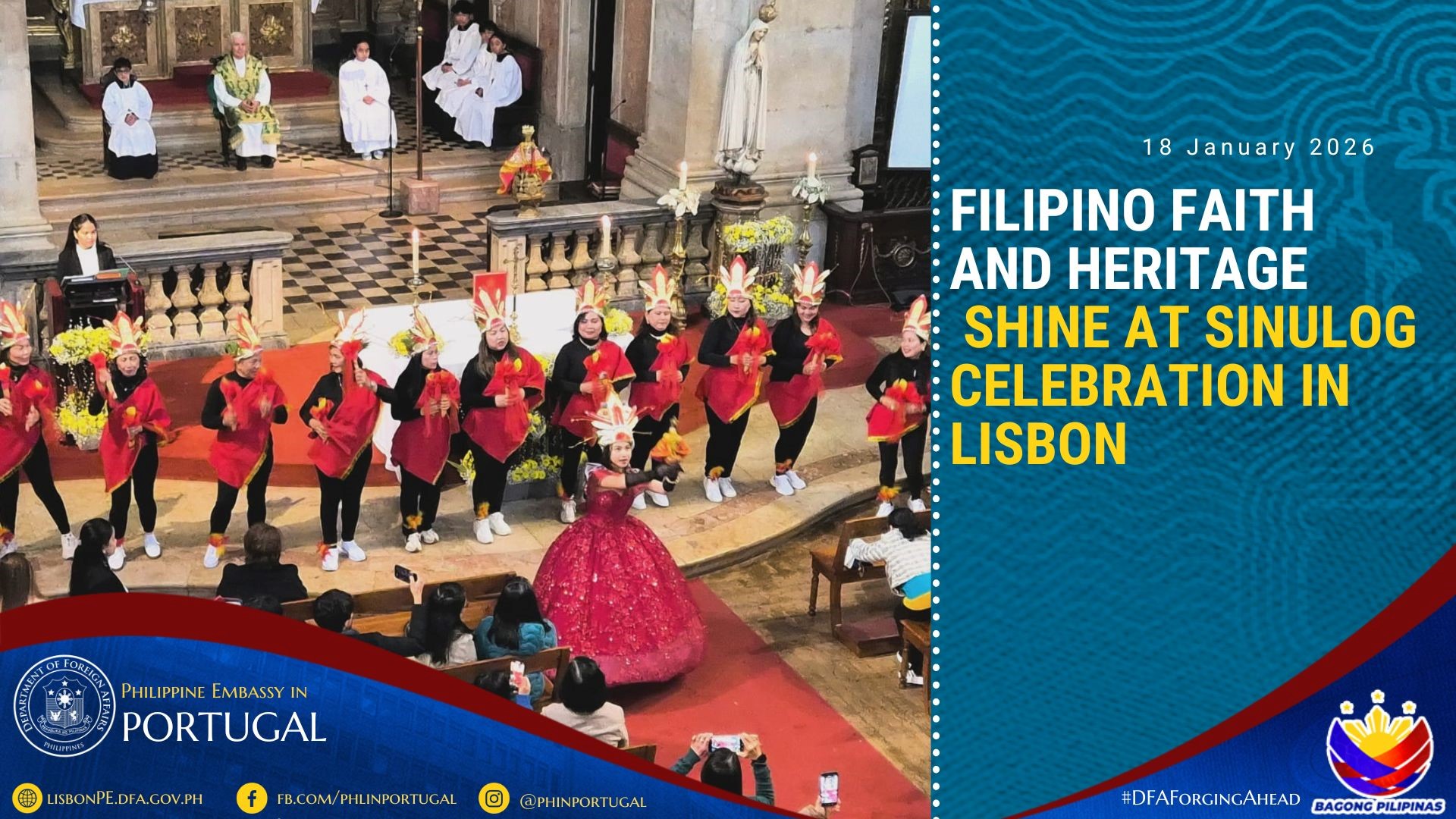
The program opened with a group performance by 14 members of the Filipino community in Lisbon, led and trained by Ms. Thelma E. Santos. The presentation featured a ceremonial procession, music, and traditional dance movements symbolizing faith and thanksgiving, evoking the spirit and cultural meaning of the Sinulog.
Taking center stage was Sinulog Queen Maria Ivelise Mayumi Somlani Mourão, whose performance embodied both devotion and cultural pride. Reflecting on her commitment to the tradition, she shared, “As a Filipino-born Portuguese I felt great pride in participating in St Nino celebrations that honor the crossing of cultures that run in me. Performing as the Queen in Sinulog deepened my appreciation of Filipino culture because I realized the festival isn’t just a celebration. It’s identity, faith, and community expressed through discipline and tradition. Through my portrayal, I hoped to show that leadership should be graceful but grounded: honoring the Santo Niño, respecting the people, and carrying tradition with humility.”
This was followed by a solemn Eucharistic celebration presided over by Rev. Joseé Antunes da Silva. An estimated 200 Filipinos and Portuguese attended the celebration.
The Sinulog Festival is a religious and cultural celebration honoring the Señor Santo Niño, traditionally observed on the third Sunday of January, and marked by prayer, music, and dance. Its roots date back to 1521, when Portuguese explorer Ferdinand Magellan introduced the image of the Santo Niño to Queen Juana of Cebu after her baptism, marking the beginning of Filipino devotion that the festival continues to celebrate today. END